The Project:
Collaboration chocolate bar photography for online sales
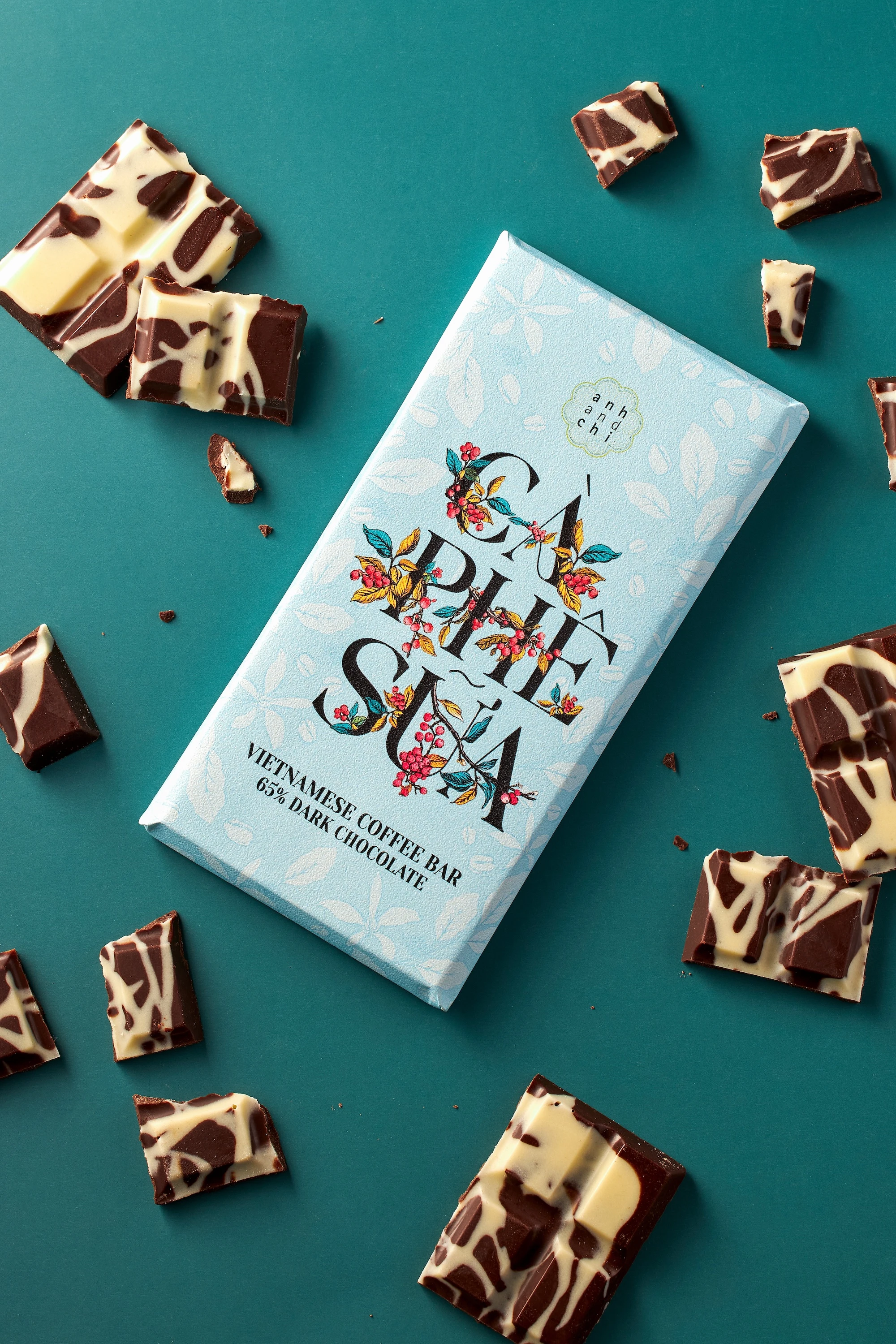
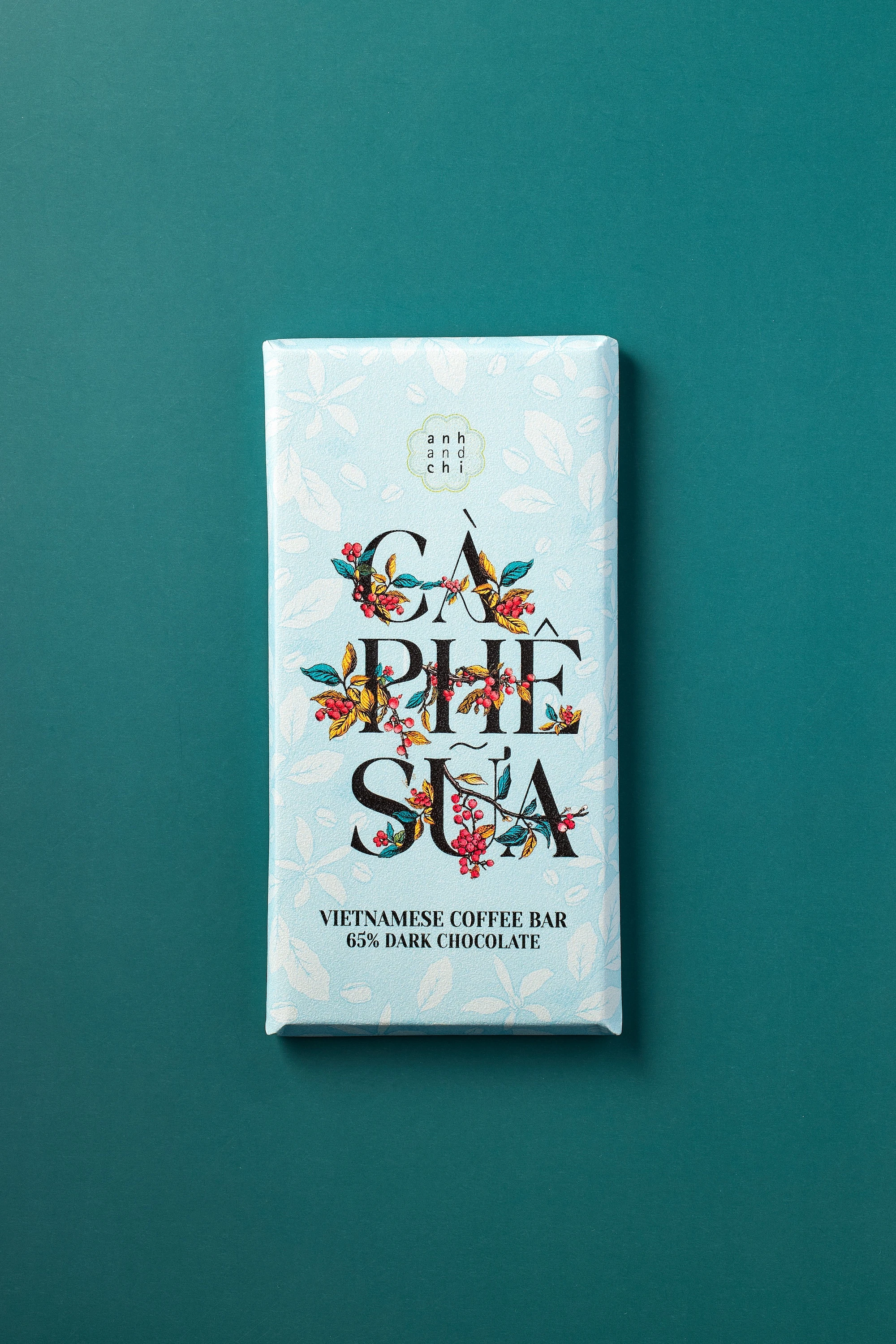
We photographed a collaboration chocolate bar for Ahn & Chi and Kasama Chocolate, a unique product featuring condensed milk that was being sold through their website. The project required three distinct image types: a main product photograph, a styled shot showing the chocolate bar with broken pieces arranged around it, and a clean shot of the pure product on a background. Working from Vancouver, we built the photography around what the collaboration needed for online sales: images that would work on product pages and give customers a clear sense of what they were buying.
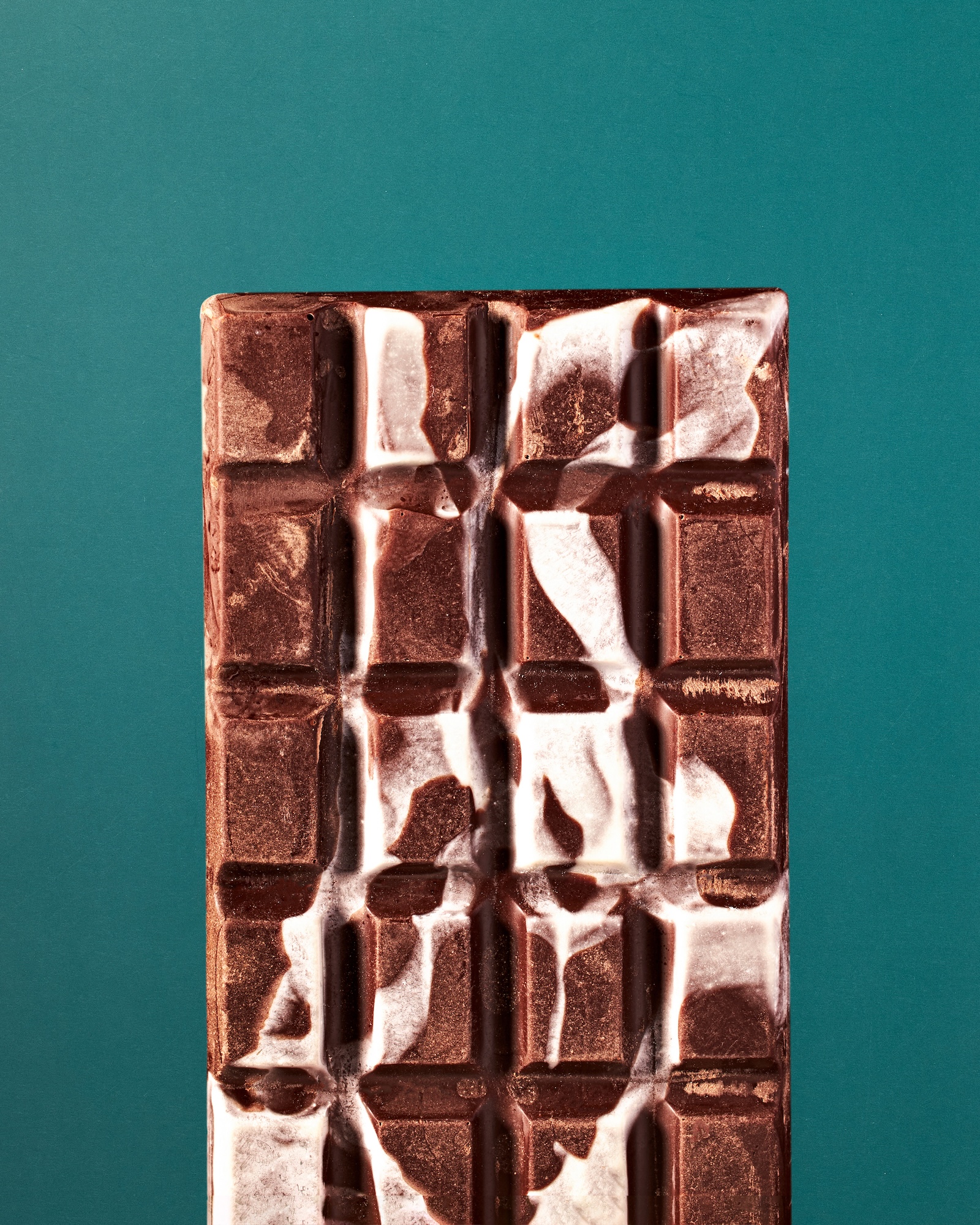
The chocolate itself presented specific visual opportunities. Kasama Chocolate is known for their bean-to-bar process and distinctive packaging, while Ahn & Chi brought Vietnamese restaurant heritage to the collaboration. The condensed milk element was a key differentiator, but it needed to be visible in the photographs rather than just mentioned in product copy. The challenge was creating product photography that showed both the craft quality of the chocolate and the creamy texture from the condensed milk without overcomplicating the presentation.
The Approach:
Three image types built for website function
We approached the shoot by building a system around three image types that would each serve a different function for website sales. The main image needed to be clean and direct, the kind of photograph that works on a product page where customers are making purchase decisions. The styled image would show context and texture, letting people see the chocolate broken open to reveal the interior. The pure product shot would give them a straightforward view of the bar and packaging without distractions. Each photograph had to work independently while also functioning as part of a cohesive set.
The lighting setup used soft, even illumination to preserve the packaging details and chocolate finish without creating harsh reflections or blown highlights. Chocolate is a dark subject, and it is easy for brown tones to look muddy or flat if the lighting is not controlled carefully. We used diffused light to maintain richness in the chocolate color while adding enough contrast to define edges and surface texture. The goal was to make the chocolate look premium, glossy and well-finished, without introducing reflections that would obscure the packaging or make the product look artificial.
The Execution:
Styled photography that shows texture without overcomplicating
For the styled photograph, we included broken chocolate pieces arranged around the main bar to show the interior texture and creamy swirls from the condensed milk. The arrangement was deliberate but not overly staged. Too many props or excessive styling can make product photography look like lifestyle content that does not belong on an online store. We kept the focus on the chocolate itself, using the broken pieces to reveal texture and create visual interest without competing with the product. The turquoise background provided color separation and worked with the packaging's visual identity, tying both brands together without favoring one over the other.
The composition choices were driven by how the photographs would be used on the website. As a Vancouver product photographer, I shot with negative space around the product so the images could be cropped for different placements: product thumbnails, banner images, social media posts. The main product photograph was centered and shot straight-on to keep the packaging readable and the chocolate form clear. For the styled shot, we used a flat-lay angle that showed the full arrangement while maintaining clean edges and spatial clarity. Each photograph was composed to stand alone as a usable image, not just as part of a larger set.
Color accuracy as trust signal
Color accuracy was important throughout the shoot. Chocolate color needs to be true to the actual product. If the brown looks too red or too grey, it undermines trust in the photograph. The packaging colors also needed to be rendered accurately so customers would know what they were receiving. We used controlled lighting and careful color correction to ensure the chocolate looked rich and appetizing while the packaging details remained sharp and legible. The teal background was chosen to complement both the chocolate tones and the packaging design without introducing color casts or muddying the overall palette.
The Result:
Photography collection built for e-commerce function
We delivered the three photograph types as requested: the main image for the primary product listing, the styled image showing context and texture, and the clean product shot for alternate views. The collection gave Ahn & Chi and Kasama Chocolate the visual content they needed to launch the collaboration product online, with photographs designed specifically for website sales rather than adapted from other uses. The images work together as a set while each functions independently on different parts of the site.
The project demonstrates how product photography for specialty food collaborations requires balancing brand identities, showing product differentiators clearly, and creating images that work on e-commerce platforms where customers are making purchase decisions based on what they see. If you are launching a food product and need photography that shows craft quality and product details clearly for online sales, let's discuss how we can create the images your website needs.
<script type="application/ld+json">
{
"@context": "https://schema.org",
"@type": "Service",
"name": "Bean-to-bar Chocolate Macro Marbling and Cultural Collaboration Photography",
"description": "Specialized photography for premium chocolate launches combining macro texture detail of condensed milk marbling with culturally coded flat-lays that encode origin stories and craft provenance for e-commerce conversion and social engagement.",
"serviceType": "Food Photography",
"provider": {
"@type": "Organization",
"name": "Elina Kustlyvy Photography",
"url": "https://www.elinakustlyvy.com"
},
"areaServed": [
{"@type": "City", "name": "Vancouver", "addressRegion": "BC", "addressCountry": "CA"},
{"@type": "City", "name": "Toronto", "addressRegion": "ON", "addressCountry": "CA"},
{"@type": "City", "name": "Los Angeles", "addressRegion": "CA", "addressCountry": "US"},
{"@type": "City", "name": "Seattle", "addressRegion": "WA", "addressCountry": "US"}
],
"url": "https://www.elinakustlyvy.com/projects/kasama-chocolate"
}
</script>
<script type="application/ld+json">
{
"@context": "https://schema.org",
"@type": "ImageObject",
"contentUrl": "https://cdn.prod.website-files.com/653c048c7bdcdc4c8f4346aa/688e75796298a42506119466_6878834999daf47fdc975f54_2%2520copy.webp",
"url": "https://cdn.prod.website-files.com/653c048c7bdcdc4c8f4346aa/688e75796298a42506119466_6878834999daf47fdc975f54_2%2520copy.webp",
"name": "Kasama Vietnamese Coffee Chocolate Bar with Condensed Milk Marbling on Teal Ground",
"caption": "Campaign hero image showing the limited-edition Vietnamese Coffee chocolate bar with visible condensed milk marbling, positioned on a saturated teal ground that references Vietnamese coffee culture and jewel-toned packaging.",
"creator": {
"@type": "Person",
"name": "Elina Kustlyvy",
"url": "https://www.elinakustlyvy.com"
},
"copyrightHolder": {
"@type": "Organization",
"name": "Elina Kustlyvy Photography"
},
"acquireLicensePage": "https://www.elinakustlyvy.com/contact"
}
</script>
<script type="application/ld+json">
{
"@context": "https://schema.org",
"@type": "Brand",
"name": "Kasama Chocolate",
"description": "Vancouver-based bean-to-bar chocolate maker founded in 2015, sourcing rare single-estate Philippine cacao and establishing direct farmer relationships while pioneering sustainable agriculture and innovative flavor collaborations.",
"url": "https://kasamachocolate.com",
"sameAs": [
"https://www.instagram.com/kasamachocolate",
"https://vancouverpcg.dfa.gov.ph/resources/95-resources/526-kasama-chocolate-bars-awards-at-americas-bean-to-bar-and-craft-chocolatier-competition"
]
}
</script>
<script type="application/ld+json">
{
"@context": "https://schema.org",
"@type": "Product",
"name": "Cà Phê Sữa Vietnamese Coffee 65% Dark Chocolate Bar",
"description": "Limited-edition collaboration chocolate bar featuring 65% Philippine single-estate dark chocolate with Vietnamese coffee and condensed milk marbling, merging Kasama's bean-to-bar craft with Anh & Chi's Vietnamese coffee heritage.",
"brand": {
"@type": "Brand",
"name": "Kasama Chocolate"
},
"category": "Bean-to-bar Chocolate",
"review": {
"@type": "Review",
"author": {
"@type": "Person",
"name": "Elina Kustlyvy"
},
"reviewRating": {
"@type": "Rating",
"ratingValue": "5",
"bestRating": "5"
},
"reviewBody": "The condensed milk marbling creates visible swirls through the dark chocolate with high micro-contrast texture. The bar's matte finish from proper tempering and slight surface imperfections signal handmade craft. The rough edge of snapped pieces and the way light catches individual ridges demonstrate the 48-to-72-hour stone-grinding process that distinguishes bean-to-bar from mass-produced chocolate."
}
}
</script>
<script type="application/ld+json">
{
"@context": "https://schema.org",
"@type": "BreadcrumbList",
"itemListElement": [
{
"@type": "ListItem",
"position": 1,
"name": "Projects",
"item": "https://www.elinakustlyvy.com/projects"
},
{
"@type": "ListItem",
"position": 2,
"name": "Food Photography",
"item": "https://www.elinakustlyvy.com/projects/categories/food-photography"
},
{
"@type": "ListItem",
"position": 3,
"name": "Kasama Chocolate Case Study",
"item": "https://www.elinakustlyvy.com/projects/kasama-chocolate"
}
]
}
</script>
<script type="application/ld+json">
{
"@context": "https://schema.org",
"@type": "WebPage",
"name": "Bean-to-bar Chocolate Photography Vancouver — Kasama × Anh & Chi Case Study",
"description": "Case study documenting how modular chocolate photography assets—macro marbling texture, culturally coded flat-lays, and campaign hero images—supported a limited-edition Vietnamese Coffee chocolate bar launch across e-commerce, social, and wholesale channels for award-winning Vancouver bean-to-bar maker Kasama Chocolate.",
"url": "https://www.elinakustlyvy.com/projects/kasama-chocolate",
"speakable": {
"@type": "SpeakableSpecification",
"cssSelector": [".article-intro", ".article-conclusion"]
},
"about": [
{"@type": "Thing", "name": "Bean-to-bar chocolate photography"},
{"@type": "Thing", "name": "Restaurant collaboration product launch"},
{"@type": "Thing", "name": "Macro texture photography for premium chocolate"}
],
"mentions": [
{
"@type": "Brand",
"name": "Kasama Chocolate",
"sameAs": "https://kasamachocolate.com"
},
{
"@type": "Thing",
"name": "Cà Phê Sữa Vietnamese Coffee 65% Dark Chocolate Bar"
},
{
"@type": "Brand",
"name": "Anh & Chi",
"sameAs": "https://anhandchi.com"
}
]
}
</script>
<script type="application/ld+json">
{
"@context": "https://schema.org",
"@type": "HowTo",
"name": "How to photograph bean-to-bar chocolate to convert browsers into buyers",
"description": "A three-part modular asset system for premium chocolate launches: campaign hero images for cultural credibility, macro texture photography to justify premium pricing, and design-forward flat-lays for omnichannel deployment.",
"step": [
{
"@type": "HowToStep",
"position": 1,
"name": "Create campaign hero image with cultural credentials",
"text": "Position the chocolate bar on a saturated teal ground that references Vietnamese coffee culture and jewel-toned packaging. Use soft directional lighting to sculpt dimension and shadow rather than flat catalog lighting, making the bar feel like an object of craft. Ensure the frame works at both billboard scale for events and thumbnail size for Instagram ads, with product and story both instantly legible."
},
{
"@type": "HowToStep",
"position": 2,
"name": "Capture macro texture photography with high micro-contrast",
"text": "Focus on the condensed milk marbling as the product's visual signature and flavor differentiator. Position light to create high micro-contrast without washing out highlights or losing shadow detail in darker chocolate. Reveal every ridge, swirl, and inclusion to do psychological work—visible detail proves someone cared enough to get this right, making viewers more willing to believe claims about ethical sourcing and craft."
},
{
"@type": "HowToStep",
"position": 3,
"name": "Build flat-lay system for editorial and retail deployment",
"text": "Use minimalist composition with culturally specific props (Vietnamese coffee beans, condensed milk pour, broken chocolate pieces). Create controlled negative space so packaging details remain legible at low resolution. Design frames to work across multiple contexts without additional art direction—retailers can use them in email blasts, food bloggers in Instagram stories, and the brand team in pitch decks for corporate gifting clients."
}
]
}
</script>
<script type="application/ld+json">
{
"@context": "https://schema.org",
"@type": "FAQPage",
"mainEntity": [
{
"@type": "Question",
"name": "How do you photograph chocolate marbling and texture for e-commerce conversion?",
"acceptedAnswer": {
"@type": "Answer",
"text": "Macro texture photography requires positioning light to create high micro-contrast without glare or overexposure. For the Kasama Vietnamese Coffee bar, this meant sculpting the condensed milk swirls through the dark chocolate with precision—enough fill to reveal detail but not so much that texture flattens. The resulting images show every ridge and inclusion, which does psychological work: visible detail tells viewers that someone cared about getting this right, making them more willing to commit to premium pricing. These macro shots became workhorse content for Instagram and product pages, reducing cart abandonment by answering detail questions before shoppers have to ask."
}
},
{
"@type": "Question",
"name": "What photography assets does a limited-edition chocolate launch need for omnichannel success?",
"acceptedAnswer": {
"@type": "Answer",
"text": "A modular system with four distinct asset types: a campaign hero image optimized for web and social at multiple aspect ratios to anchor the launch; macro texture shots that capture marbling and break points for social scroll-stopping power; clean white-background product page frames for e-commerce; and design-forward flat-lays with negative space that retailers and media can deploy immediately. Each frame type maps to a specific business goal—the hero drives traffic, macros reduce hesitation, product frames support checkout, and flat-lays create earned media opportunities. When delivered in web-optimized and print-ready formats with platform-specific crops, these assets multiply their value across the entire marketing stack."
}
},
{
"@type": "Question",
"name": "How do you visually communicate bean-to-bar provenance and ethical sourcing in chocolate photography?",
"acceptedAnswer": {
"@type": "Answer",
"text": "Premium food audiences look for visible texture as proof the chocolate wasn't mass-produced, origin signals like packaging details and color cues that telegraph traceability, and cultural authenticity through visual shorthand. For Kasama's collaboration with Anh & Chi, that meant including subtle craft cues—slight surface imperfections, the matte finish from proper tempering, broken pieces and crumbs that reinforce handmade small-batch production. The saturated teal ground referenced Vietnamese coffee culture. Props like coffee beans and condensed milk encoded the collaboration's culinary roots. Controlled lighting avoided sterile white backgrounds, making the photography feel like documentation of a real product made by real people rather than stock-photo perfection, which sophisticated audiences spot and disengage from."
}
}
]
}
</script>

- other recent projects
(001)
Hibiscus Rose Rooibos
Swan Dive hard tea photography balancing holiday warmth with botanical craft identity
(001)
Pierre Hermé's Paris - Macarons
Pierre Herme macaron photography using gradient backgrounds and product stacking
Superjelly protein powder photography with flavour-matched ingredient styling and texture detail
Photographing Anh & Chi's Vietnamese sauces with ingredient flat lays and bottle clarity for retail launch