
Julia
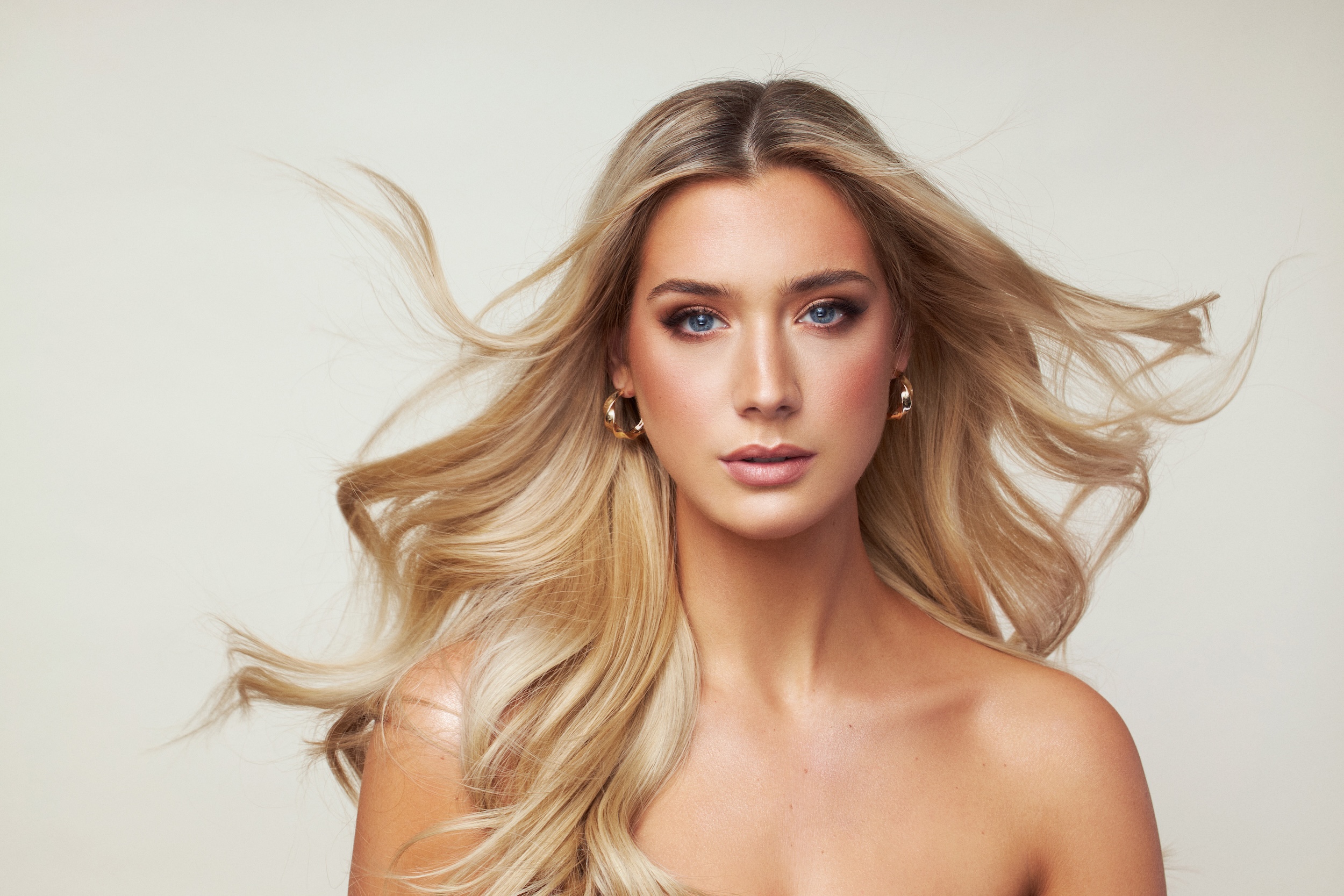
Julia model portfolio photography showcasing healthy hair movement and natural radiance

The Subject:
Why range matters more than polish in agency books
I chose Julia as a creative subject because models face a challenge most photographers ignore: you can't just be "pretty" anymore. Casting directors scroll hundreds of portfolios a day, and if your book doesn't instantly communicate range, skin tone fidelity, and category readiness, you're passed over before anyone reads your measurements. Julia's look spans both accessible commercial and elevated beauty contexts, which made her ideal for testing an approach that would work for talent building agency books or brands shooting lookbooks.
The Brief:
One master headshot that replaces ten inconsistent ones
The brief I set for myself was to create a tight headshot series that functions across every channel a model or brand touches: casting decks, agency websites, social profiles, e-commerce thumbnails, and press kits. It had to work everywhere without looking like a generic test shoot. Most portfolio photographers shoot what they like, not what gets someone booked. I wanted to prove that a single master headshot, executed with deliberate lighting and background control, could anchor an entire portfolio update while staying adaptable enough for brands to drop into paid campaigns later.
The Problem:
Inconsistency kills castings faster than bad lighting
Working from Vancouver, I see this problem constantly. Talent shows up with inconsistent books: one photographer loves moody shadows, another over-retouches skin into plastic, a third delivers only horizontal crops. Casting teams can't assess someone's real look, and brands hesitate to license images that feel too editorial or too flat. The solution isn't more variety, it's a system.
I built the lighting around a soft, even key with controlled directionality to sculpt features without creating hard shadows that date the image or distort skin tone. The goal was to preserve natural fidelity while giving enough dimension that the shot reads "premium" instead of passport photo.
The Execution:
Background as strategic absence
Background choice mattered as much as light. I used a neutral, distraction-free seamless to keep all attention on the subject. No textures, no gradients, no environmental context that locks the image into a single use case. Brands need to be able to drop this into a clean layout or overlay text without fighting competing visual information.
Motion that registers without disrupting
I kept focus sharp on the eyes (non-negotiable for casting work) and introduced subtle wind-swept motion in the hair to add energy without sacrificing clarity. Too much movement and the image feels unusable, too little and it's static. The motion here registers as alive but controlled, which is exactly what beauty and commercial clients want when they're choosing between fifty headshots that all technically "work."
Framing for ten formats from one capture
Framing followed a centered composition optimized for readability at every scale. Casting boards display thumbnails, websites need main crops, social media demands vertical formats, and press kits require horizontal lockups. I framed with enough negative space that the image holds impact from thumbnail to full-bleed, and the centered composition means it can be cropped square, vertical, or horizontal without losing the subject. This isn't about making one perfect shot, it's about making one shot that performs ten jobs.
The Application:
Where this system works in real pipelines
The resulting image works well as a master headshot for agency books, casting decks, website bios, and social profiles. It could function as the anchor for a portfolio refresh, establishing a consistent aesthetic standard that other sets can match. For brands, this approach translates directly into lookbook photos, product pages, or campaign teasers where the face needs to carry the entire frame without competing elements.
The lighting and color pipeline I used here are repeatable across multiple subjects, which means a brand shooting ten models in a day can maintain visual cohesion without sacrificing individuality.
The Principle:
Plan for distribution, not just capture
This is spec work, but it demonstrates what happens when you plan a shoot around how images actually get used instead of chasing a signature style. The technical choices (soft key with directionality, neutral background, precise eye focus, restrained motion, and centered framing) aren't arbitrary. They're responses to the specific problem casting directors and brand teams face: too many images that look good in isolation but fail when dropped into real workflows.
As a Vancouver product photographer, I wanted to explore how the same principles that make product photos work across platforms could apply to model portfolios. The discipline is the same: understanding where the image needs to show up and building backward from those requirements.
If you need headshots that work across castings, campaigns, and digital channels without looking generic, let's build a system that fits how your audience actually hires. Reach out and we'll map your portfolio gaps to a shot list that performs.


